
What was impossible to miss from the line-up of speakers at the RAISE 2026 conference was that women's football is different, in many ways, from men's football. We heard from club execs, sponsors and rightsholders across the industry who all hinted at the same thing. You still play with eleven players and kick a ball with your feet, but almost everything else is different. This is why women's football can't be sold as an add-on to the men's game.
Where the fans come from
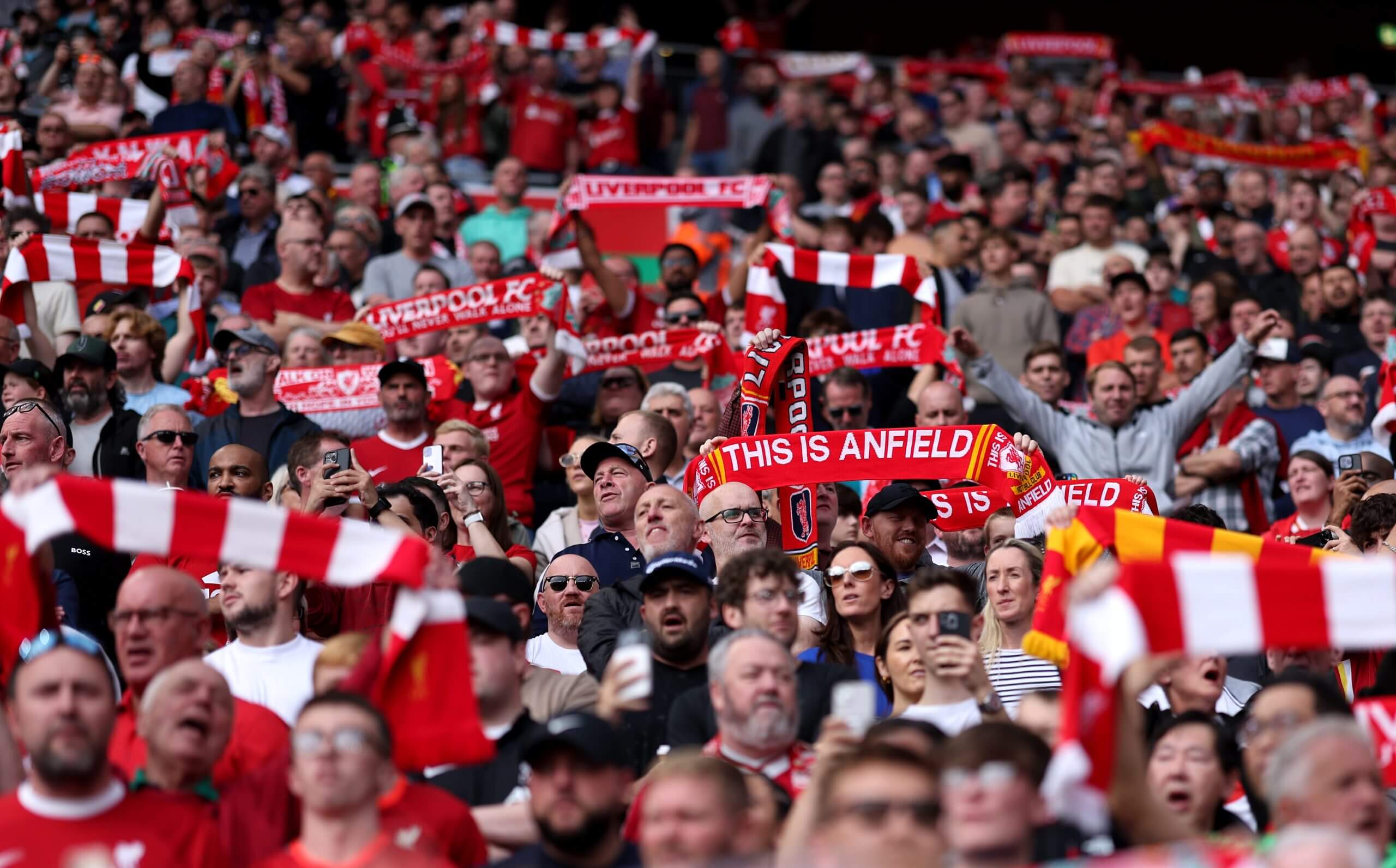
First, the fan base is different. The men's game can lean on a tribal inheritance of support passed down through generations. Ask someone from Sussex why they support Liverpool (guilty) and the answer is usually that a relative handed them a shirt at five, and the whole family fell in behind it. Or, a family has been wearing Newcastle's black and white stripes for generations, so of course they do too.
Source: Getty Images
Women's football doesn't have this as it’s a younger product. Visibility exploded after England's Euro 2022 win and attendances rose with it. However, that growth has since levelled off, and the international audience hasn't converted into a domestic one. Populous and YouGov's Designing the Future of Matchday report found that among fans who've attended a women's match in the last five years, 43% describe themselves as casual, following the internationals more closely than club football. Only 15% go to a club match at least monthly.
Getting fans to come back
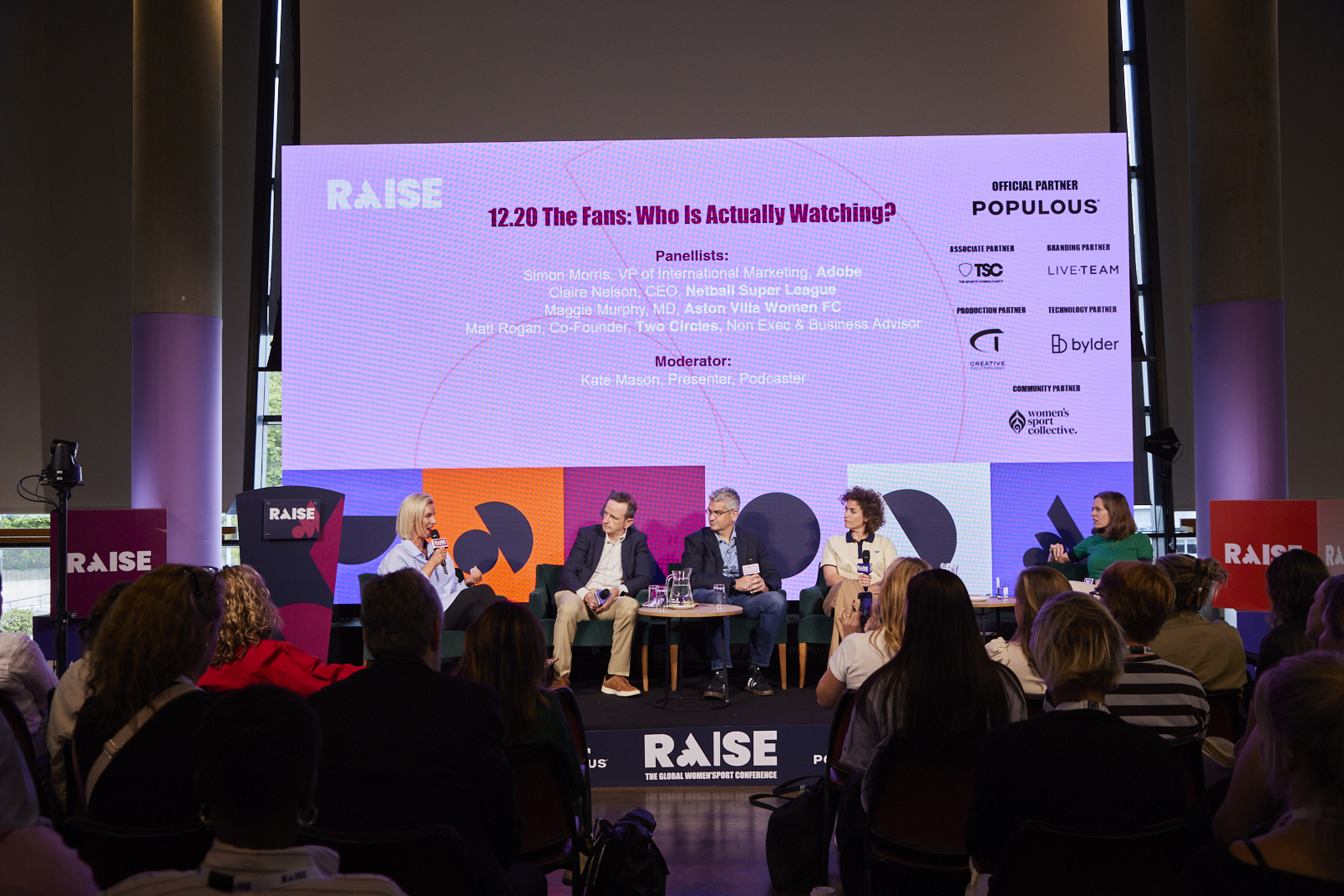
To improve this, clubs have tried to close the gap with low ticket prices and a family-friendly atmosphere, but the next challenge is converting one-off attendance into a habit. As Maggie Murphy, Managing Director of Aston Villa Women, pointed out, their data shows four games is the tipping point for obsession. By the fourth match a fan attends in a season, they're hooked. So, this is what the clubs need, because the men's game has already proven what a hooked fan is worth over a lifetime. They buy season tickets and shirts, attend away days, and eventually the next generation is in the same colours.
There's also an assumption in the industry that the women's game inherits the men's audience but actually, the Populous x YouGov Sport data says otherwise. Only around a fifth of fans have crossed over from an associated men's team. Four in five came from somewhere else, which makes them a new audience, not a borrowed one. That leads to a critical conclusion: clubs can’t use borrowed strategies to hook a new audience! Women’s football doesn’t have an awareness issue (at least in England) — everyone knows the Lionesses win things. Instead, the challenge is attachment. So how do clubs get to this four-game ‘tipping point’?
Source: Stacey Osbourne
Different crowd needs a different fan experience
As Nina Bibby, Group CMO of Barclays, put it in her keynote: clubs need to obsess over fan experience. Barclays has been the WSL's title sponsor since 2019 and is its biggest single backer, so they have committed to this themselves. But the experience can't be a copy of the men's version, because the people buying it aren't the same people. In the same Populous study, 32% of Potential Fans - those yet to attend a women’s game - rank family-friendly seating as their top priority. This is different for a stadium built for the men's game, where groups of male fans have had the same seats since the ‘90s. The challenge for clubs is to adapt a stadium in a way that can provide for the shift in demographics at the women's game.
Brighton have taken this seriously. Their 'Built For Her' project is the first purpose-built women's stadium in the UK and Europe, due by 2030/31. It starts from the needs of female athletes and a female-dominated crowd rather than adapting a ground built for men and the men who watch them. As CEO Paul Barber put it, the men's stadiums aren't unfit for purpose, they're just not designed for a different demographic. However, it costs £75–80m, and Brighton are funding it themselves. Most clubs can't do this, so the question is what the rest can do with what they have got. Fan zones, switch-up of food and drink, and family provision are all small fixes that are a chance to hook a fan.
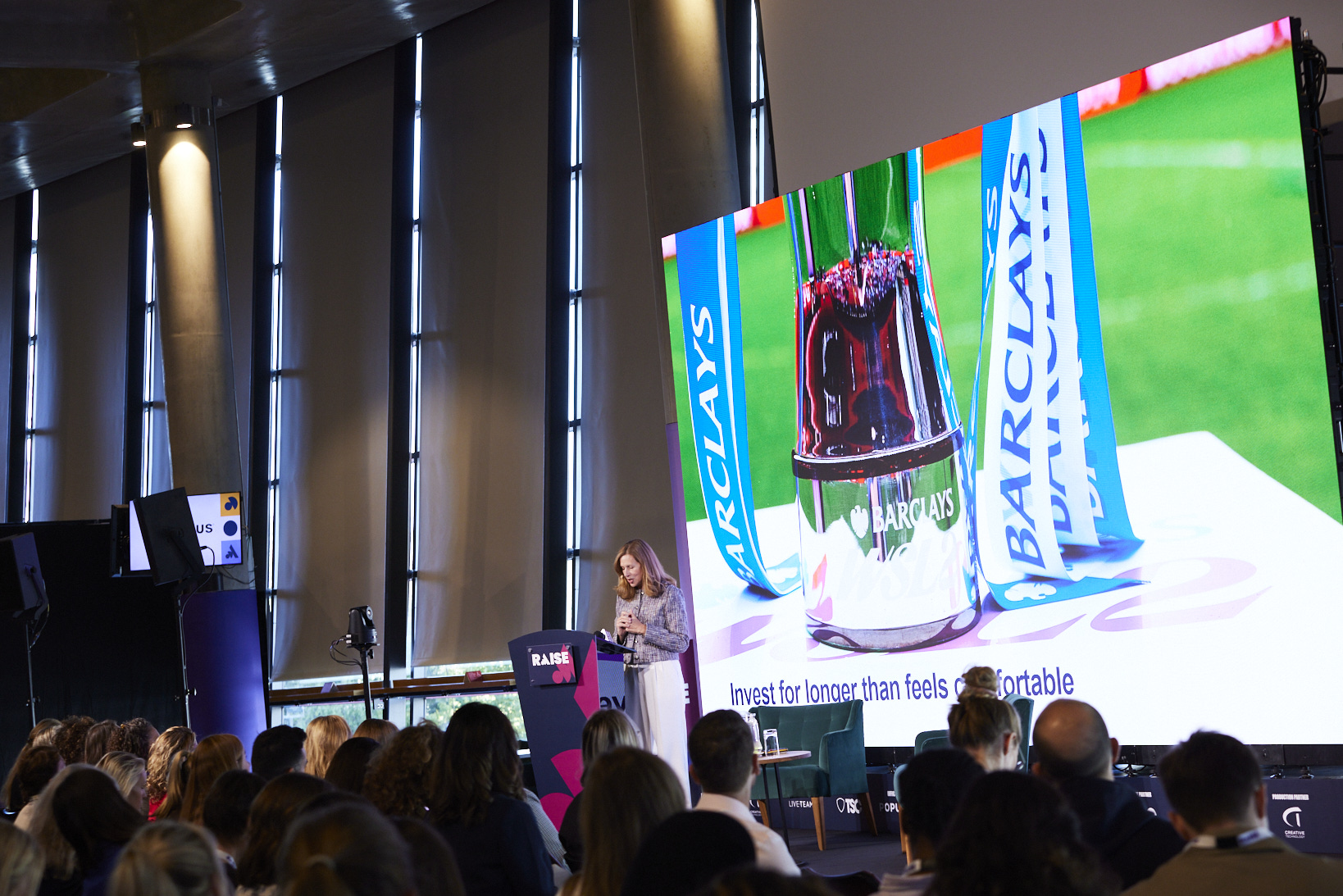
Nina Bibby delivering the keynote speech. Source: Stacey Osbourne
Who is paying for it?
So, my final point is addressing the elephant in the room: where is this investment coming from? In conversations at RAISE, it came up how clubs’ resources are strained, and when a club is pushed, it goes to the men's side, because that's where the money is.
The investment has to come from brands willing to invest in an asset with a long-term view, seeing what it will become rather than what it returns this season. Barclays has done exactly that. Bibby's message for brands was to get in early and build the whole product, fan experience included, so that women's football stops spiking at tournaments and becomes part of a sports fan's ordinary week. She also pointed out that women's sports sponsorship is growing 50% faster than men's, so the data supports the movement.
Yes, backing the men's game will always be safer. But staying safe means brands will miss the chance to own a fan base that is new and different from the men’s, so nobody else has claimed it yet.